
A car battery operates through a continuous, demand-driven electro-mechanical cycle: it stores chemical energy, releases a high-current burst to crank the engine, buffers electrical voltage while driving, and absorbs power from the alternator to restore full charge.
Understanding how a lead-acid or AGM (Absorbent Glass Mat) car battery functions requires examining its internal electrochemistry, the sequence of starting an engine, and how the vehicle’s charging system maintains electrical equilibrium under heavy accessory loads.
1. The Electrochemical Reaction Inside a Car Battery
Most internal combustion engine (ICE) vehicles use a 12-volt, 6-cell lead-acid battery. Each individual cell generates approximately 2.1V, yielding a fully charged resting voltage of around 12.6V to 12.8V.
The Discharging Reaction (Power Delivery)
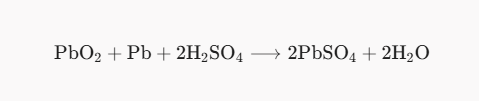
When an electrical load is applied (such as turning the key or pressing the start button), a chemical reaction begins between the positive plate, negative plate, and the electrolyte solution:
Positive Plate: Lead Dioxide (PbO2)
Negative Plate: Sponge Lead (Pb)
Electrolyte: Dilute Sulfuric Acid (H2SO4) and Water (H₂O)
During discharge, the sulfuric acid reacts with both plates, converting them into Lead Sulfate ( PbSO4) while releasing free electrons through the external circuit. As electrons flow from the negative terminal to the positive terminal, the electrolyte’s acid concentration drops, leaving behind primarily water (H₂O).
The Charging Reaction (Energy Restoration)
When the engine runs, the alternator forces current in the reverse direction through the battery. This reverses the chemical process:
Lead Sulfate (PbSO4) on the plates breaks down.
Lead converts back to Lead Dioxide (PbO2) on the positive plate and Sponge Lead (Pb) on the negative plate.
Sulfate ions return to the water, restoring the electrolyte’s sulfuric acid density and bringing cell voltage back to operating levels.

2. The Engine Starting Sequence: Cold Cranking Amps in Action
The engine starting process is the most demanding phase of a battery’s operational cycle, taking place across four distinct steps:
- Ignition Trigger: Turning the key or pressing the start button energizes the starter solenoid, completing the heavy-gauge circuit between the battery terminals and the starter motor drive.
- High-Current Inrush Draw: The starter motor requires an immediate current surge often between 300 to 800+ Amperes to overcome static engine friction and crank the heavy crankshaft assembly. This rating is designated as Cold Cranking Amps (CCA).
- Engine Combustion: The battery concurrently powers the engine control unit (ECU), fuel pump, and ignition coils (or glow plugs in diesels) to ignite the fuel-air mixture in the cylinders.
- Alternator Hand-Off: As soon as the engine catches and turns over independently, the starter disengages. The engine mechanically drives the alternator via the serpentine belt, transferring primary power supply responsibilities away from the battery.
3. The Recharging Phase & The Alternator’s Role
Once the engine is running, the battery shifts from a primary power source to a secondary storage and stabilizing component.
Power Sharing Between Alternator and Battery
- Primary Generation: The alternator converts mechanical engine rotation into alternating current (AC), which internal diodes convert to direct current (DC). It operates at a regulated system voltage between 13.8V and 14.7V.
- Replenishing Crank Energy: Because alternator output voltage is higher than resting battery voltage (12.6V), current flows back into the battery, driving the reverse chemical reaction needed to restore consumed energy.
- Short Trips vs. Complete Restoration: A single high-amperage engine start consumes a small total amp-hour (Ah) volume, but replenishing that charge takes several minutes of continuous driving. Frequent short trips can leave the battery in a chronic state of undercharge, gradually causing hard sulfation on the lead plates.
4. Voltage Stabilization and Buffering
Beyond cranking the engine, a car battery functions as a low-impedance electrical capacitor and buffer:
- Dampening Ripple Voltage: The alternator generates small voltage fluctuations (AC ripple) as engine RPM varies. The battery absorbs these rapid voltage transients, maintaining a steady DC supply across delicate onboard computers and sensitive electronic sensors.
- Supporting Transient Peak Loads: If peak electrical demands temporarily exceed maximum alternator output (e.g., using electric power steering, heated seats, climate control blowers, and high-beam headlights simultaneously at low idle), the battery instantly supplies supplementary current to prevent voltage sags.
5. Environmental Impacts: Temperature Effects on Battery Output
Ambient temperature directly influences electrochemical efficiency, affecting both internal resistance and overall power availability.
Cold Weather Performance (<0°C)
- Increased Resistance: Sub-zero temperatures slow down internal chemical reactions and increase electrolyte viscosity.
- Reduced Output vs. Increased Load: At-18°C (0°F), a lead-acid battery may lose up to 30-50% of its rated cranking power. Concurrently, cold, thick engine oil increases mechanical resistance, requiring significantly more amperage to turn the crankshaft.
Hot Weather Performance (>40°C)
- Accelerated Degradation: While high ambient heat temporarily boosts internal chemical mobility and voltage output, it accelerates grid corrosion and speeds up electrolyte evaporation.
- Internal Stress: Prolonged exposure to engine bay heat above $50^\circ\text{C}$ accelerates self-discharge rates and degrades internal structural components long before cold weather symptoms manifest.
6. Resting Voltage vs. Usable Capacity Under Load
A common diagnostic misconception is assuming a battery is healthy simply because a digital multimeter reads 12.0V or higher at rest.
- Surface Voltage vs. True Capacity: A degraded or heavily sulfated battery can retain a surface voltage reading of 12.2V – 12.4V when no current is being drawn (chemical potential present).
- Behavior Under Heavy Load: When subjected to a heavy starter draw (100-300A), elevated internal resistance causes cell voltage to drop below minimum operating thresholds (<9.6V), rendering the battery incapable of cranking the engine despite showing positive resting voltage.
7. Modern Automotive Systems and Parasitic Loads
Modern vehicles place continuous demands on the 12V battery well after the key is removed and the ignition is turned off.
- Continuous Standby Draw: Systems such as keyless entry receivers, alarm sensors, remote telematics, and engine control unit memories draw continuous parasitic current (typically 20 mA- 50 mA).
- Advanced Battery Management Systems (BMS): Modern vehicles equipped with Start-Stop technology and micro-hybrid systems monitor state-of-charge (SoC) and state-of-health (SoH) continuously via intelligent battery sensors (IBS). These systems dynamically adjust alternator charging voltage to reduce parasitic engine drag, optimize fuel economy, and manage deep-cycling demands.
Frequently Asked Questions
How does a car battery generate electricity?
A car battery generates electricity through a reversible electrochemical reaction between lead dioxide positive plates, sponge lead negative plates, and a dilute sulfuric acid electrolyte. When a circuit is completed, chemical bonds break and re-form, converting stored chemical energy into flowing electrons across the external battery terminals.
Why does a vehicle need an alternator if it has a battery?
The battery provides the heavy initial energy surge required to turn the starter motor and crank the engine when the vehicle is off. Once running, the engine rotates the alternator, which generates the continuous electrical power needed to operate vehicle systems and recharges the battery for the next start.
Why won’t a car start if the battery voltage reads 12 Volts?
A battery reading 12.0V is actually at a low state of charge (around 25% capacity, compared to 12.6V+ for 100%). Furthermore, open-circuit voltage does not measure power delivery under load. If internal plate resistance is high due to sulfation or cell damage, the voltage will drop below 9.6V under the heavy current draw of the starter, failing to crank the engine.
What is the difference between starting a battery in cold vs. hot weather?
Cold weather increases internal chemical resistance and reduces chemical reaction speed, lowering available Cold Cranking Amps (CCA) right when engine oil is thickest. Hot weather speeds up internal chemical activity, increasing temporary output, but accelerates internal plate grid corrosion, electrolyte evaporation, and permanent capacity loss over time.